

The Quick Read
- Self-collection, including at home, is suitable for women at average risk for cervical cancer.
- If you are experiencing abnormal vaginal bleeding, you will need to first have this evaluated by a provider before you can screen at home.
- There are certain groups of people who may have a higher risk for cervical cancer based on their screening history and other medical factors. In these cases, it is recommended that you remain under closer surveillance with your existing healthcare team.
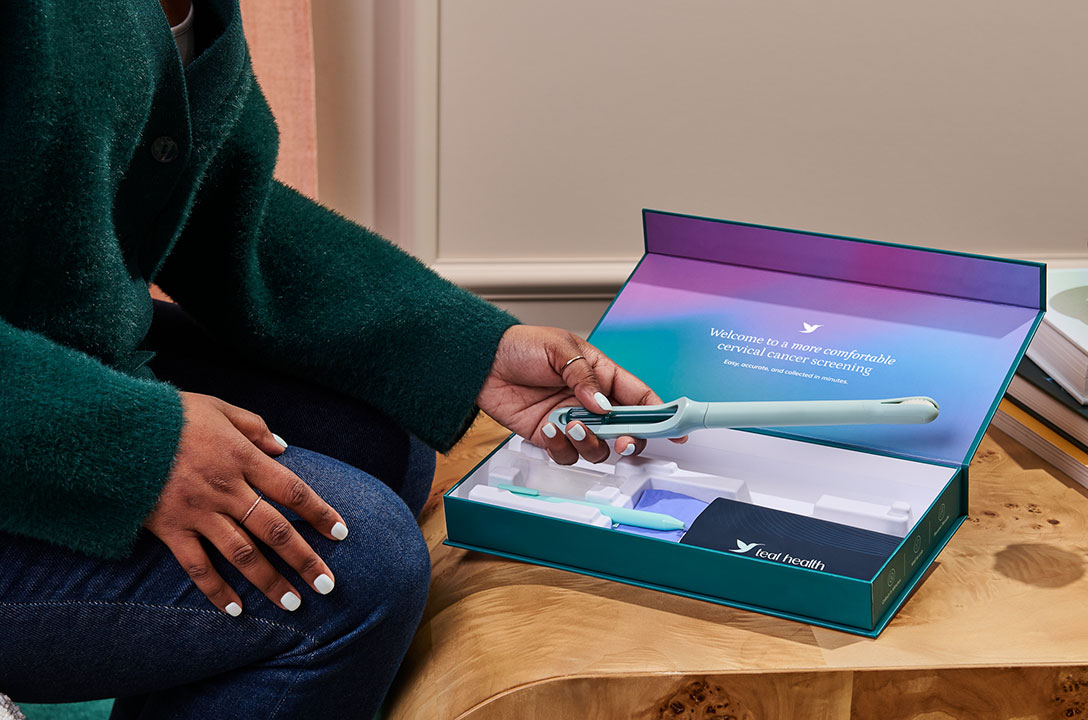
The FDA-authorized Teal Wand allows you to self-collect a vaginal sample for your cervical cancer screening from the comfort and privacy of your home. At the lab, your sample will be tested on an FDA-approved primary HPV test (the same test used in the doctor’s office). Primary HPV testing is the most sensitive and recommended screening test for cervical cancer, with self-collection endorsed by leading medical organizations including the American College of Obstetricians and Gynecologists, American Society for Colposcopy and Cervical Pathology (ASCCP), and the American Cancer Society (ACS).
We are on a mission to make sure every person with a cervix is screened for cervical cancer, and we will update our at-home screening eligibility as medical guidelines change over time.
In this guide, we discuss who can use the Teal Wand (right now).
Who Can Self-Collect at Home?
Per guidelines, self-collection is suitable for women at average risk for cervical cancer. Primary HPV testing is recommended for women between the ages of 25-65 who have an intact cervix (not had a full hysterectomy with removal of the cervix).
If you are pregnant or within 6 weeks of giving birth, we recommend waiting to use the Teal Wand. This is because the safety of the Teal Wand has not been studied in women who are pregnant or have recently given birth. If you have a pregnancy due date, you can let us know when you register for Teal, and we will reach out to you when you can screen.
Abnormal Bleeding Needs to Be Evaluated by a Provider
If you are experiencing abnormal vaginal bleeding, you will need to first have this evaluated by a provider before you can screen at home. The provider can help you determine the cause of the abnormal bleeding and, based on this, whether at-home self-collection is right for you.
This is because abnormal bleeding can be a symptom of cervical cancer. Symptoms of cervical cancer can include pain or bleeding during sex, unusual spotting, or a mass you can feel in the cervix. If you have any of these symptoms, contact a healthcare provider right away.
What counts as abnormal bleeding?
- Bleeding repeatedly after sex (when not on your period)
- Bleeding in between periods and/or more than 10 days per month
- Bleeding after menopause (meaning bleeding after you have not had a period for 12 consecutive months)
What does not count as abnormal bleeding?
- Spotting at the beginning or end of your normal period
- Bleeding from progesterone-only contraceptives
- Bleeding from continuous birth control pills
Those Who Are High-Risk for Cervical Cancer Should Continue Established Care
There are certain groups of people who may have a higher risk for cervical cancer based on their screening history and other medical factors. This includes people who:
- Had a LEEP or cold knife procedure for moderate to severe precancerous changes in the past 25 years (HSIL, CIN2, CIN3, atypical glandular cells)
- Have a medical history of any of the following:
- Cancer of the cervix, vagina, vulva, endometrium, or uterus
- HIV
- In utero DES (diethylstilbestrol) exposure
- Are currently taking immunosuppressant medications
These factors could mean that you have a history of high-grade precancer, cancer, or are at a higher risk for developing cervical precancer and cancer. In these cases, it is recommended that you remain under closer surveillance with your existing healthcare team. During this surveillance period, you may be undergoing more frequent screenings that involve cytology tests or regular colposcopies.
It is important that you stay engaged in this close care with your established providers, so that there is no disruption to the plan in place to keep you healthy.
Teal follows current medical guidelines from leading organizations, and we will continue to update this eligibility guide as the recommendations for self-collection evolve.

.png)
