Screen for cervical cancer with Primary HPV testing
For decades the Pap smear was how cervical cancer was caught. Today, primary HPV testing is the recommended test and it allows for self-collection at-home screening.
Primary HPV testing is the most sensitive and efficient cervical cancer screening test available today
Primary HPV testing is recommended by the American Cancer Society5, American College of Obstetrics and Gynecology8, and the U.S. Preventive Services Task Force9
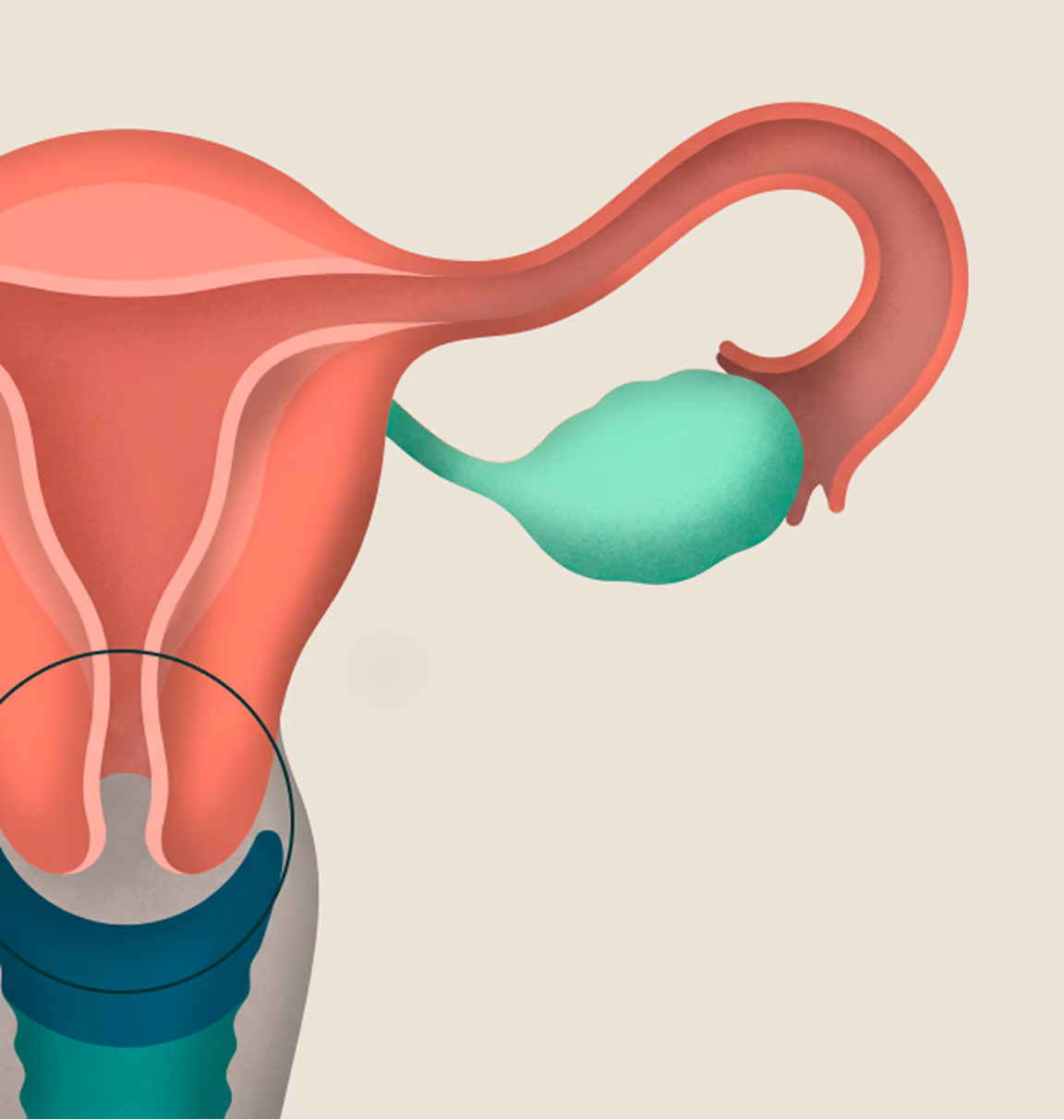
High-risk HPV causes nearly all cervical cancer
Not all HPV is the same.
The vast majority cause nothing at all. A few cause warts. And 14 — the high-risk types — are the ones screening tests look for.4
Cervical cancer screening then and now
Cervical cancer screening has gotten better over 80 years. The science kept narrowing in on the actual cause, and the experience is now easier than ever.
Three FDA-approved screening tests.
All three modern FDA-approved cervical cancer screening tests are good at finding cancer and pre-cancer.5 The Primary HPV test is the most sensitive, and it’s the one the Teal Wand uses.
Tests for the 14 high-risk HPV types that cause nearly all cervical cancers, catching pre-cancer at the source, before cells change. HPV testing is the only test that allows self-collection.
Test performed with the Teal Wand
Every 3 yrs
Runs both the HPV test and a Pap together. Catches the cause and any cellular changes — can only be done with a speculum exam in a clinical setting.
Every 5 yrs
Looks under a microscope for abnormal cells that have already started to change — nearly always caused by persistent HPV.
Every 3 yrs
It was so easy! The instructions were clear and the whole process took less than 5 minutes. Mailing my sample was truly the most complicated part of the process.
29 yrs old
A positive HPV test isn’t a diagnosis— it’s a heads-up.
Here’s what happens next.

Vaccination + screening = nearly complete prevention.
The HPV vaccine (Gardasil 9) protects against the types responsible for the majority of cervical cancers and genital warts. It works best before exposure, but it can still help later.7
Vaccination doesn’t replace routine screening. The vaccine prevents most, but not all high-risk types, so screening through age 65 is still recommended.
Six things people need to know about HPV
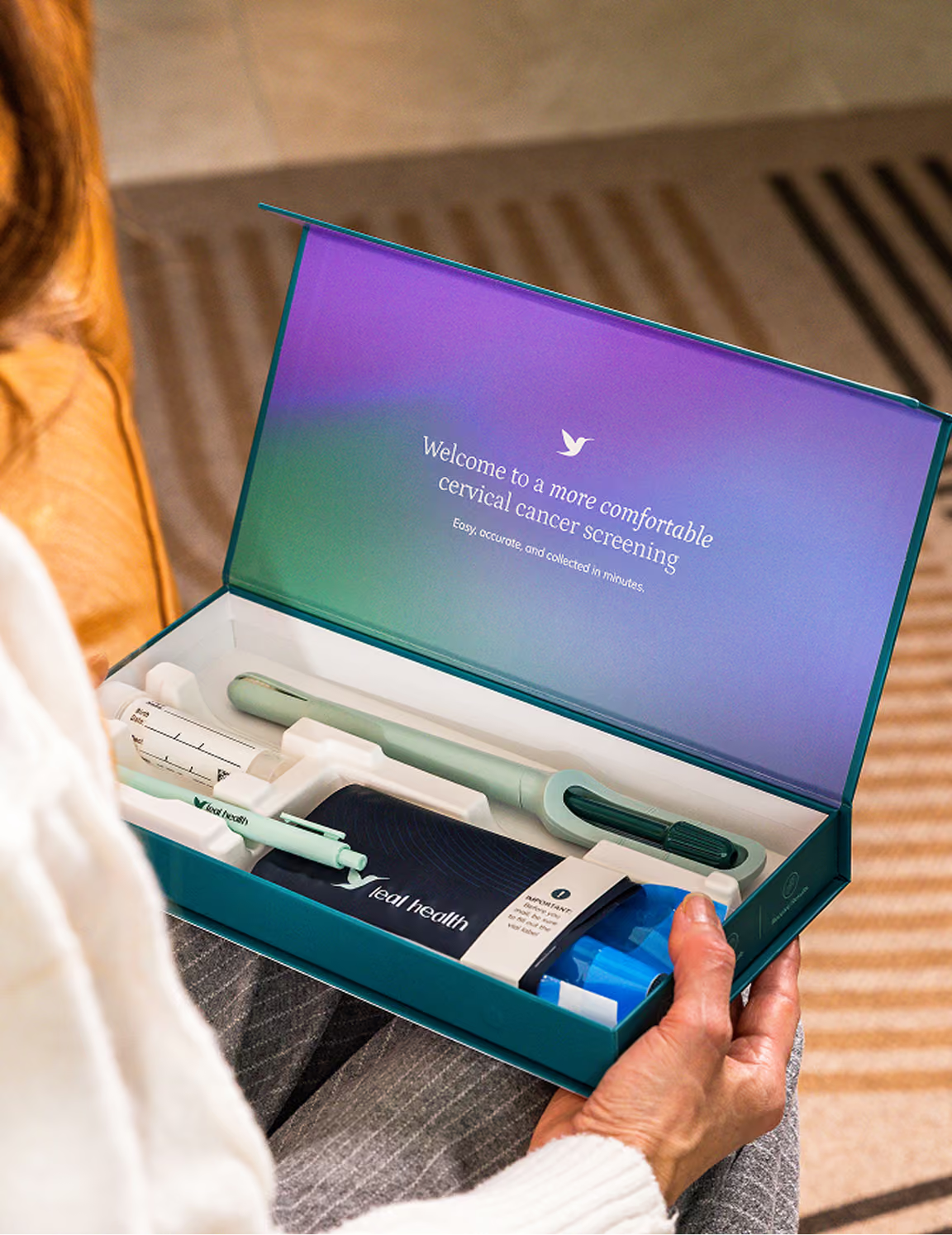
Cervical cancer screening, at home, in five minutes.
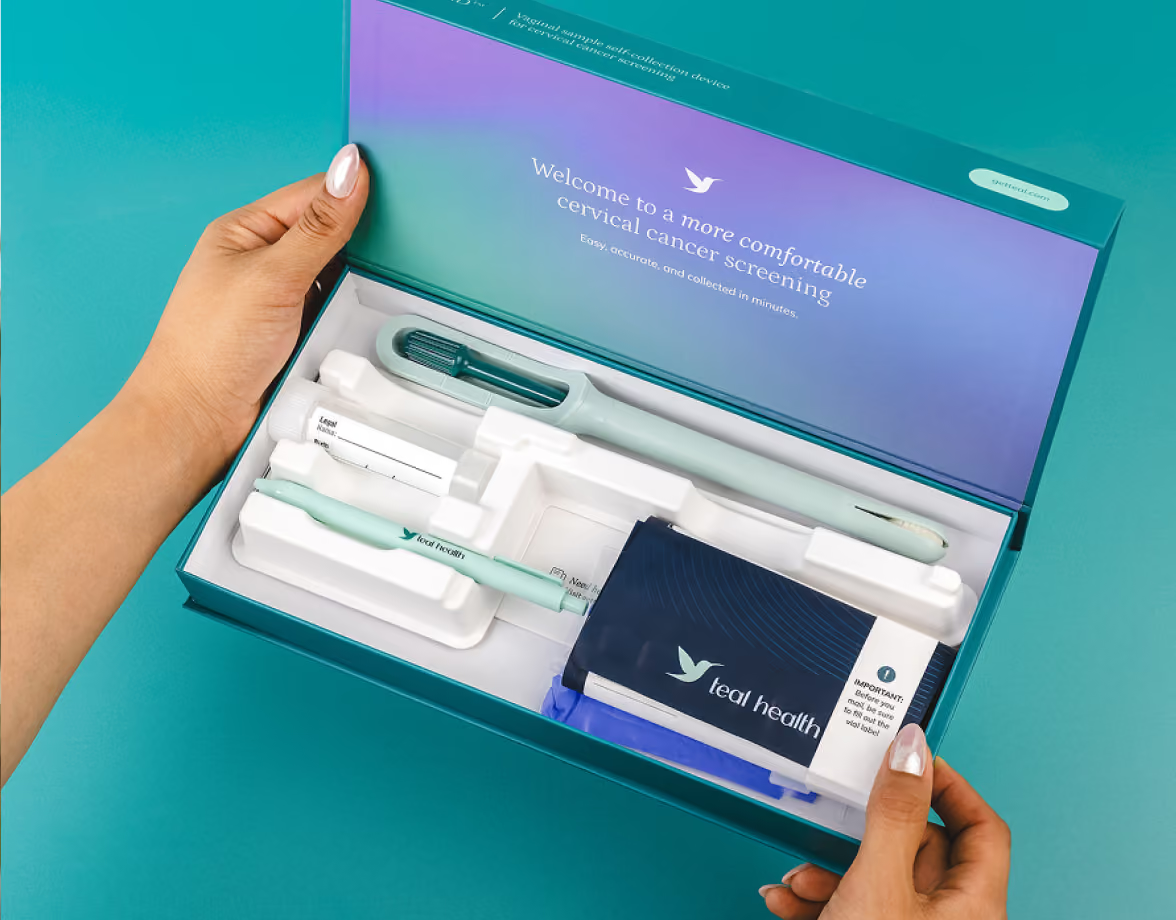
The Teal Wand is the first FDA-authorized at-home self-collection device for cervical cancer screening. It uses the same primary HPV test as the clinic — without the speculum.
Answers to questions commonly asked
No. A Pap smear and an HPV test are two different tests that look for two different things. A Pap smear examines cervical cells for abnormal changes. An HPV test looks for the presence of high-risk HPV. Unless your provider specifically ordered an HPV test or a co-test alongside your Pap smear, your routine Pap smear did not test for HPV. If you are unsure which test you received at your last screening, ask your provider or check your results paperwork.
For most people, yes. The Primary HPV test is more sensitive than the Pap smear. It detects the cause of cervical cancer earlier, before cell damage has occurred. The American Cancer Society now recommends Primary HPV testing as the preferred screening method. The Pap smear is still an acceptable option but requires more frequent screening due to its lower sensitivity.
A positive result means high-risk HPV was detected in your sample. It does not mean you have cancer. Most HPV infections clear on their own without causing harm. Your Teal Medical provider will review your result, explain which HPV type was found, and advise on next steps. For many people, the next step is simply monitoring with another screening at a shorter interval.
A co-test runs both a Pap smear and an HPV test on the same sample. It is highly sensitive because it combines both tests, but it also means a higher likelihood of follow-up testing that may not be necessary. A co-test must be performed in-clinic because the Pap smear component requires cells collected from the cervix. The American Cancer Society considers Primary HPV testing alone to be the preferred approach over a co-test for average risk people.
Primary HPV testing is the recommended test by leading medical organizations: American Cancer Society, ACOG, and HRSA. Primary HPV testing detects the virus that causes nearly all cervical cancers before cell damage occurs. Because it catches the underlying cause earlier, it is more sensitive than the Pap smear.
Primary HPV testing is the only cervical cancer screening test that allows for self-collection, enabling more women to get screened.
No. A Pap smear requires cells collected directly from the cervix using a speculum and brush, which must be performed by a clinician in a clinic. At-home self-collection is only available for the Primary HPV test, which collects a vaginal sample rather than a cervical sample. The Teal Wand uses Primary HPV testing for this reason.
Check your results paperwork or contact your provider. If your results mention cytology or cell changes, you had a Pap smear. If they mention HPV or specific HPV types, you had an HPV test. If both are mentioned, you had a co-test. Many people assume they had an HPV test when they actually only had a Pap smear, so it is worth confirming.
The Teal Wand tests your self-collected sample using Primary HPV testing, which checks for 14 types of high-risk HPV. It is the same FDA-approved test used in clinics and the method recommended by the American Cancer Society. It is not a Pap smear. When you screen with the Teal Wand, you are getting the most sensitive cervical cancer screening test available.