
The Quick Read
- 100% Untreated Foam: The Teal Wand collection sponge uses virgin medical-grade polyurethane foam with zero active chemicals, liquids, or preservatives.
- Standard Sterilization: Ethylene oxide (EO) is used on 50% of all U.S. medical devices (including pacemakers and surgical kits) to keep them free of bacteria.
- Tested & Off-Gassed: EO is a volatile gas that continuously evaporates over time. By the time the Wand reaches your door, residual levels are far below strict international safety limits.
- Lowest Exposure Category: Designed for a single, ~5-minute surface contact, sitting in the safest, lowest-exposure tier defined by international standards.
For decades, cervical cancer screening has meant the exact same thing: sitting on a crinkly paper sheet in a cold exam room, waiting for a rigid steel speculum. For many women, that discomfort and anxiety cause them to delay or skip screening altogether. We knew there had to be a better way—one that put personal comfort, dignity, and control back in your hands.
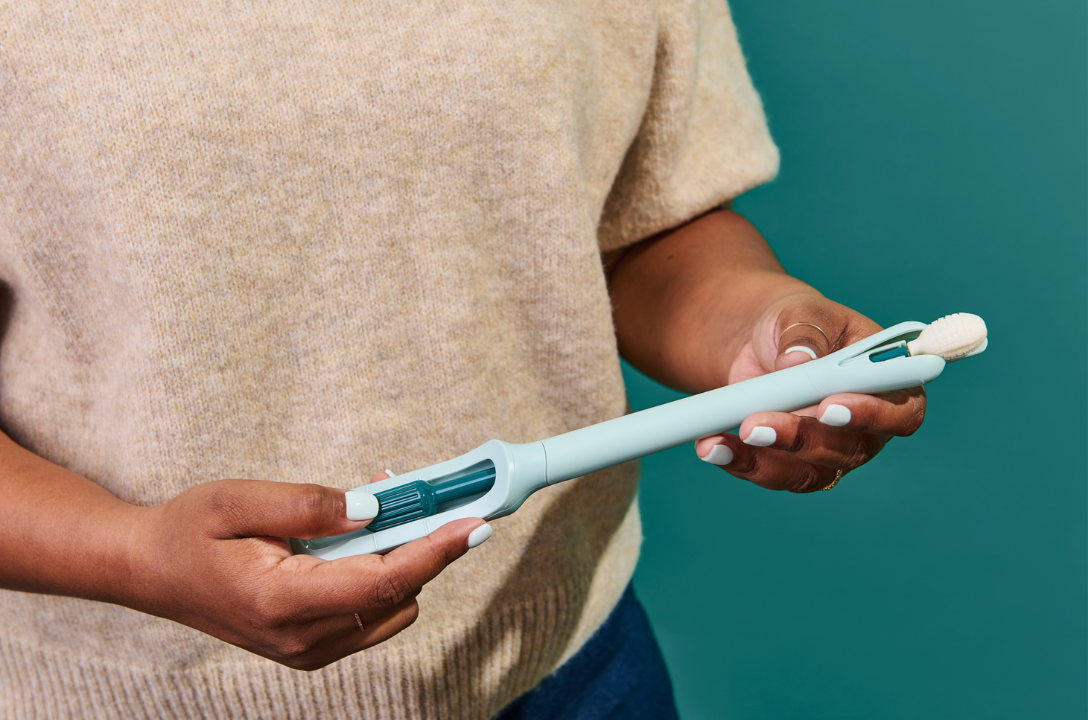
That vision led to the creation of the Teal Wand, authorized by the FDA in May 2025 as the first at-home self-collection device for cervical cancer screening. Every part of the Wand was meticulously engineered with your body in mind. Below is an in-depth look at how the device was designed, what materials touch your body, and the rigorous science that assures accuracy and safety at every step.
Purity and Intentionality in Design
When designing a device meant for intimate health, simplicity and material purity are paramount. We designed the Wand using biocompatible, medical-grade materials and completed extensive safety testing on the device:
- Biocompatible Device Body: The handle and Wand structure are crafted from biocompatible, medical-grade plastics, specifically polycarbonate, polypropylene, and thermoplastic elastomers (TPE). These materials were chosen because they are smooth and durable.
- Virgin Polyurethane Foam: At the tip of the Wand sits a soft sponge made of "virgin" medical-grade polyurethane foam. This gentle material was selected specifically to collect surface cells and sample DNA effectively without pinching or scraping.
- Zero Added Chemicals or Preservatives: One of the most frequent questions we receive from patients is whether the sponge contains active liquids or chemical preservatives (read our quick FAQ on material safety). The answer is a clear no. The sponge is completely untreated. There are no preservatives, chemical coatings, or collection agents on the foam—just clean, pure medical-grade foam designed to act as a mechanical collector.
Curious about the thought process behind every angle, feature, and contour? You can explore the story behind the design on the Teal Wand Design page.
Why Sterilization Matters
Because the Teal Wand comes into contact with sensitive mucosal tissue, keeping it free of bacteria and microorganisms during manufacturing and transport is non-negotiable. Introducing non-sterile items into mucosal areas can carry a risk of bacterial exposure.
To reduce this risk, we use ethylene oxide (EO) processing. While traditional sterilization methods like steam use intense heat and moisture that would warp, melt, or degrade medical-grade plastics, EO works to sterilize delicate materials thoroughly.
This is standard practice across modern medicine: EO has been used safely to sterilize health care equipment since the 1950s, and the U.S. Food and Drug Administration (FDA) notes that it is used on roughly 50% of all sterile medical devices in the United States. That is about 20 billion devices every single year. Everything from surgical kits, wound dressings, and catheters to heart valves and vascular stents undergoes this sterilization process.
Understanding the Science Behind Residuals
It is completely natural to ask questions about the chemicals used in medical manufacturing, especially if you have seen news coverage regarding ethylene oxide. Context is critical here: those news stories, EPA regulations, and legal headlines are referring to industrial air emissions around manufacturing facilities and long-term workplace exposure for factory plant workers. They are not about the trace residue on a finished, packaged, tested medical device.
To ensure consumer products are safe, international safety standards (such as ISO 10993-7) set strict limits on allowable EO residuals on a medical device. Here is how those safety guarantees work in practice for the Teal Wand:
- The Power of Off-Gassing: Ethylene oxide is a highly volatile gas. It does not accumulate or stick permanently to medical plastics; instead, it constantly breaks down and evaporates over time. This means time is entirely on your side: the further a device gets from its sterilization date, the less EO remains.
- Tested Far Below Safety Ceilings: Under international standards, a device used once for less than 24 hours (like the Teal Wand) is allowed up to 4 milligrams of residual EO. Laboratory testing confirms that just 48 hours post-sterilization, the Teal Wand measures under 1 milligram—less than a quarter of the allowable limit.
- Continuous Dissipation During Transit: Because the Teal Wand spends at least two weeks traveling from processing to your doorstep, it continues to off-gas every single day in its package. By the time you open the box to collect your sample, the residual level is even lower than the already-minimal lab reading.
Putting Safety Limits in Perspective
International safety regulators set limits based on contact duration. The Teal Wand sits in the absolute lowest-exposure tier defined by global standards: a single-use device touching surface mucosal tissue for about five minutes or less. It does not enter the bloodstream, touch internal organs, or remain in the body.
For comparison, permanent medical implants—such as pacemakers, coronary stents, heart valves, and artificial joint replacements—are also sterilized using ethylene oxide. Because those devices stay inside the human body indefinitely, international toxicological standards permit them to carry more than 600 times as much lifetime EO exposure as a brief self-collection wand. Millions of people live healthy, full lives with those permanent devices every day.
See How Simple Collection Is
Understanding safety standards is one thing, but seeing the device in action brings it all together. The collection process takes about five minutes in the comfort and privacy of your home. You can watch our video tutorial and review step-by-step guidance: How do I collect a sample?
Screening on Your Terms
Cervical cancer is almost entirely preventable when caught early through routine screening, yet millions of women delay care because traditional exams feel invasive or uncomfortable. We engineered the Teal Wand so you never have to compromise between clinical rigor, personal comfort, and peace of mind.
If you have specific medical questions, a known allergy or sensitivity to ethylene oxide, or want personalized guidance, please speak with a Teal clinician or your own healthcare provider. You can also reach our support team directly anytime at help@tealhealth.co.
Ready to screen on your terms? Get started with Teal Health today.