

Get real with Teal
Thoughtful, trusted articles covering a range of women’s health topics - to help you stay informed and support your health and well-being.


Get Teal Health in your inbox
Featured article

Can I Screen for Cervical Cancer At Home?
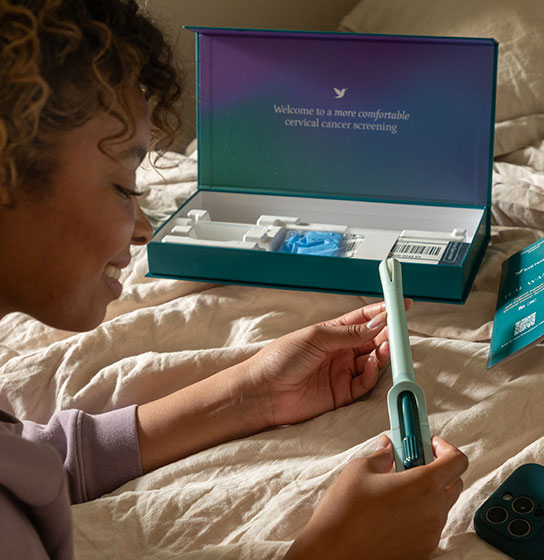
The Teal Wand has been FDA-authorized, allowing you to self-collect a vaginal sample for your cervical cancer screening from the comfort of your home. In this guide, we discuss who can use the Teal Wand (right now).
Read MoreLatest articles

New Research: At-Home Cervical Cancer Screening Helps Close a Persistent Disparity for LGBQ+ Patients
New Teal Health research identifies self-collection meaningfully improves the cervical cancer screening experience for LGBQ+ individuals. Participants using the Teal Wand reported greater comfort, a stronger sense of control and empowerment, reduced trauma- and dysphoria-related distress, and a clear preference for at-home screening.
Teal Health is proud to share new peer-reviewed findings from our SELF-CERV pivotal trial, published this month in Cancer Control, titled “Addressing Cervical Cancer Screening Disparities: At-Home Self-Collection Among LGBQ+ Populations.” The study shows that the Teal Wand™ — the first FDA-authorized at-home self-collection device for cervical cancer screening — works just as accurately for LGBQ+ patients as clinician-collected samples, and is meaningfully preferred by a population that has long been underserved by traditional, clinic-based screening.
The disparity we set out to address
Cervical cancer is one of the most preventable cancers in existence — but more than 20 million people in the U.S. are currently behind on their screening. That gap isn't evenly distributed. People who identify as lesbian, gay, bisexual, pansexual, queer, or another sexual minority (LGBQ+) are roughly 50% less likely to be up to date on routine cervical cancer screening than their heterosexual peers. The reasons are well-documented and deeply human: access barriers, histories of sexual trauma, gender dysphoria associated with the speculum exam, and bias from healthcare providers. The result is delayed diagnosis and higher rates of cervical dysplasia and cancer in a community that deserves better.
What we studied
SELF-CERV is the largest U.S. clinical trial of at-home cervical cancer self-collection. Conducted across 16 clinical sites nationwide, it enrolled 609 participants — including 74 who identified as LGBQ+. The study compared the Teal Wand against the current standard of care: clinician-collected samples obtained with a speculum and cervical brush. Both samples were tested for high-risk HPV using the FDA-approved Roche cobas® assay. Participants also completed surveys on prior screening experiences, usability, and preferences.
What we found
The data tell a clear story:
- Clinical accuracy holds up. Agreement between self-collected and clinician-collected samples was comparable for LGBQ+ participants — meaning at-home collection delivers the same clinical performance as the in-clinic standard, with no safety concerns.
- The disparity is real and measurable. LGBQ+ participants were more likely than heterosexual participants to have delayed or avoided cervical cancer screening, reported lower engagement with preventive care overall, and described prior speculum-based exams as more painful, uncomfortable, and aversive.
- Self-collection changes the experience. LGBQ+ participants who used the Teal Wand reported greater comfort, a stronger sense of control and empowerment, and a clear preference for at-home screening over clinic-based exams.
- Privacy matters. Qualitative comments from participants highlighted reduced distress around trauma- and dysphoria-related concerns — issues that traditional screening can amplify rather than address.
- The device works for everyone. Across all groups, the Teal Wand was rated as easy to use and acceptable, demonstrating that a thoughtfully designed at-home option doesn't require trade-offs between equity and clinical rigor.
Why it matters
Cervical cancer is preventable when people get screened on schedule. But "on schedule" depends on whether the screening method actually works for the person being screened. For LGBQ+ patients, the standard speculum-based exam has too often been a barrier rather than a bridge to care. This study provides direct, peer-reviewed evidence that an FDA-authorized at-home option — paired with telehealth support — is not only clinically valid but is the option many LGBQ+ patients have been waiting for. Broader adoption has the potential to meaningfully reduce a long-standing, well-documented health disparity.
Teal Health's role
Teal Health developed the Teal Wand™ to make cervical cancer screening accessible, comfortable, and accurate for every person who needs it — including those whom the existing system has historically failed. This research is the latest addition to a growing body of peer-reviewed evidence supporting the Teal Wand, alongside our pivotal SELF-CERV results published in JAMA Network Open and our sub-analysis on screening among women with higher BMI published in Archives of Gynecology and Obstetrics. Together, these studies establish the Teal Wand as both clinically equivalent to clinician-collected screening and uniquely suited to closing screening gaps for the populations who need a better option most.
We built Teal because cervical cancer prevention should never depend on whether the standard tools were designed with you in mind. This study is one more piece of evidence that, with the right tools, they can be.

U.S. Health Department Endorses At-Home Pap-Smear Alternative to Prevent Cervical Cancer
Cervical cancer screening guidelines have been updated to recommend at-home or in-clinic self-collection Primary HPV testing. This includes Teal Health’s Teal WandTM, which is the only at-home screening option that is FDA-authorized.
You may have seen the recent headlines:
“U.S. Endorses Home Pap-Smear Alternative to Prevent Cervical Cancer” - Wall Street Journal
“Dread Pap Smears? Federal Guidelines Now Allow for a Self-Swab HPV Test” - NBC News
“Health Dept. Endorses Pap Smear Alternative“- New York Times
“A New Endorsement for HPV Self-Tests Marks Another Major Shift in Women’s Health” - Flow Space
What does this mean?
Cervical cancer screening guidelines, which are written by leading medical institutions, were recently updated. These guidelines inform women and medical providers as to who is recommended to screen and how often.
Screening guidelines get revised periodically, when research evidence supports an update. You may remember when the guidelines changed from screening every year to every 3-5 years. This was due to the introduction of HPV testing vs Pap smears alone.
Below are the recent updates that made headlines:
- December 2025: The American Cancer Society updated their cervical cancer screening guidelines to add self-collection in-clinic and at-home for Primary HPV testing as trusted and accurate alternatives to screening in-clinic with the traditional speculum exam.
- January 2026: The U.S. Department of Health and Human Services followed the American Cancer Society and endorsed self-collection Primary HPV testing in-clinic and at-home. Additionally, they are requiring insurers to cover the cost of self-collection by January 2027.
- January 2026: The ASCCP, which had previously provided follow-up testing guidance for self-collection Primary HPV testing, updated their guidelines to include the Teal Wand.
- April 2026: The ACOG updated their screening guidelines to align with the above organizations, recommending Primary HPV testing and self-collection, with provider support. ACOG noted FDA-authorized self-collection options (like Teal Health) have the ability to extend access to patients who might not otherwise be screened.
Why is this important?
These guideline updates mark the first time in history, since the Pap was introduced in the 1940’s (80+ years ago), that women of average risk for cervical cancer:
- Have options for how their cervical cancer screening sample is collected. They are no longer required to have a speculum exam for the Primary HPV test, which is the recommended test for cervical cancer screening.
- Can complete the screening privately from home.
Research within the U.S. and globally demonstrates that self-collection has the ability to increase screening rates and decrease cervical cancer cases. It can even be a driver in the efforts to eliminate cervical cancer as a public health concern. This couldn’t have come at a better time as screening rates in the U.S. have been declining for the last decade and more cervical cancer cases are being diagnosed in 30-44 year old women.
What is self-collection for cervical cancer screening?
First, let's define what cervical cancer screening is. It is a preventive cancer screening, often called the Pap. To screen for cervical cancer, a sample is collected and tested for the presence of HPV (the virus that causes cervical cancer) and/or cervical cell changes (precancer or cancer). Traditionally, this screening has been performed in a clinic with a clinician collecting the sample from the cervix, but now HPV testing can also be accomplished with self-collection.
Self-collection means you, the patient, are able to use an FDA-authorized device to collect the sample from your vagina instead of the provider collecting a sample from your cervix using the speculum and brush. It is a much more comfortable and private experience, which can be done at home through Teal Health or in the clinic (if the provider has it available). The self-collected sample is then sent to the lab for HPV testing, just like a clinician-collected sample.
- Self-collected: Vaginal sample collected by the patient and tested on the same Primary HPV test that the clinic uses. Can be done in-clinic or at-home. An in-clinic speculum exam is not required, unless HPV is detected and follow-up steps are needed, such as a Pap (to look for cell changes on cervix) or a colposcopy.
- Clinician-collected: Cervical sample that is collected using the speculum and brush, usually requiring the patient to undress and place feet in stirrups. Must be done in a clinic. This sample can be used for an HPV test and/or a Pap test. If follow-up steps are needed, a colposcopy will be requested.
What does this mean for Teal Health?
Teal Health, which received the first and only FDA-authorization for their Teal Wand self-collection device for at-home cervical cancer screening is now written into the screening guidelines, giving women more confidence in their decision to complete this critical screening from the comfort and convenience of home.
The Teal Wand is a prescription device and therefore a brief 10-minute virtual visit with a Teal provider is required prior to getting the kit shipped to your house. Today, Teal works with most major insurance plans to cover the virtual visit and lab processing fees. There is a cost for the kit today, however Teal is working with insurers to expand coverage.
Anything else you should know?
Not all of the leading medical institutions have the exact same screening guidance, which can be confusing. They all include self-collection Primary HPV testing as an accurate screening alternative, however the screening ages differ slightly between them:
- American Cancer Society: Recommends Primary HPV testing for women 25-65 years of age. Last updated December 2025.
- Health Resources and Services Administration, part of the U.S. Department of Health and Human Services: Recommends Primary HPV testing for women 30-65 years of age. Last updated January 2026.
- U.S. Preventive Services Task Force (USPSTF): Recommends Pap smears (cytology) for women 21-29 years and Primary HPV testing for 30-65 year olds. Still awaiting a final update from their 2018 guidelines. A draft update is here.
Ready to screen?
If you are interested in screening at-home, Teal Health follows the American Cancer Society’s screening guidelines, stating 25-65 year olds are eligible. To complete the medical eligibility and order your at-home screening kit, visit this page (takes about 5 minutes).

Achieving National Availability in 2026: A Milestone for the Movement to End Cervical Cancer
Teal Health is now available in all 50 states, enabling an FDA-authorized, clinically accurate at-home screening option that fits into real schedules and removes common barriers like time off, childcare, and speculum exams.
There is a persistent paradox in American women’s health. We have the vaccines and the diagnostic technology to make cervical cancer a historical footnote, yet it remains a present-day reality. Despite being nearly 100% preventable, cervical cancer rates are increasing among women aged 30 to 44.
For decades, the screening experience remained largely unchanged, until now.
Today, we are proud to announce that Teal Health’s at-home screening and telehealth platform are now available across all 50 states.
This national expansion means that a clinically accurate, FDA-authorized cervical cancer screening can finally be completed entirely on a woman's own schedule, regardless of where she lives. By moving the initial screen to a self-collected, at-home model, we are removing the friction- such as childcare, time off work, and speculum exams—that has kept women underscreened for years.
A look back at our journey thus far
Reaching all 50 states wasn't an overnight achievement; it is the culmination of a monumental 2025. Last year was dedicated to cementing our clinical foundation and evolving the standard of care so that we could deliver this solution to you today.
In 2025, we achieved several historic milestones that made this national rollout possible:
- FDA Authorization: On May 9, 2025, the Teal Wand became the first and only self-collection device authorized for at-home cervical cancer screening.
- Clinical Validation: Our results, published in JAMA Network Open, showed that the Teal Wand detected cervical precancer 96% of the time, equal to clinician-collected samples. Perhaps most importantly, 94% of participants preferred our self-collection method.
- New Guidelines: In December, the American Cancer Society and in January HRSA updated their guidelines to specify that primary hrHPV screening is the preferred screening method, and both recommend patient-collected as a screening option for average-risk women, with most private plans required to cover the screening and any necessary follow-up beginning January 1, 2027.
Our work was even recognized by TIME Magazine as one of the Best Inventions of 2025 and by Fast Company for our design innovation.
Closing the Information Gap
While expanding access is critical, a complete medical system also requires clear communication. The medical community often uses confusing terminology—HPV testing, Pap smears, cytology—that leaves many women unsure of what they need.
That is why, alongside our national expansion, we are launching a unified PSA campaign with industry trailblazers including Kindbody, Wisp, Midi Health, and Maven Clinicfor Cervical Cancer Awareness month this January. Our message is straightforward: HPV test, Pap smear, cervical cancer screening; however you say it, just don’t delay it.
A New Reality for 2026
We often hear about the elimination of diseases in a theoretical sense. With cervical cancer, the path is actually visible. We now have the tools, the clinical evidence, and the national footprint to close the screening gap.
If you have been putting off your screening because the traditional process did not work for you, 2026 is the year to prioritize your health. Together, we can finally close the screening gap and make the elimination of cervical cancer a reality.

What is Vaginitis?
Vaginitis refers to inflammation or infection of the vagina. Symptoms can range from very mild to severe and can include vaginal itching, irritation, discharge, or vaginal odor. See how to keep it healthy down there.
The vagina is an amazing self-cleaning, self-lubricating, tubular muscle (a.k.a. the birth canal), but when something is not quite right, you notice pain, itching, discharge, or odor, one of the most common reasons is a group of conditions called “vaginitis.”
What is vaginitis?
Vaginitis refers to inflammation or infection of the vagina. Symptoms can range from very mild to severe and can include vaginal itching, irritation, discharge, or vaginal odor.
The most common infectious causes include yeast (candida), bacterial vaginosis (from a group of bacterial overgrowth), and sexually transmitted infections (e.g., gonorrhea, chlamydia, herpes, trichomonas).
You can also have non-infectious vaginitis from exposure to allergens/irritants or with the lower estrogen changes of menopause.
Who is more likely to get vaginitis?
You may have an increased risk of getting vaginal infections if you have an altered immune system (ie. HIV, poorly controlled diabetes), a shift in normal vaginal flora (ie. after using antibiotics), hormonal changes (ie pregnancy, menopause), exposure from a partner (for those types transmitted sexually), or a change in personal hygiene.
What are the symptoms and treatments of vaginitis?
Infectious types:
Bacterial vaginosis - an overgrowth of several different bacteria
- Symptoms: thin/watery, white/green/gray vaginal discharge, irritation, fishy odor
- Treatment: antibiotic pills by mouth or a gel/cream you apply to the vaginal area
Yeast infection - overgrowth of yeast, usually Candida albicans (less commonly Candida glabrata)
- Symptoms: thick, white, vaginal discharge, itching, redness of vulvovaginal area
- Treatment: antifungal pills by mouth or a cream/insert applied directly to the vaginal area
Trichomonas - a parasite from a sex partner (men often have no symptoms)
- Symptoms: frothy, green/yellow discharge, irritation, itching
- Treatment: antibiotic pills by mouth
Herpes - a virus (type 1 or 2 ) from skin-to-skin contact with a sex partner
- Symptoms: blisters → ulcers, pain, itching
- Treatment: antiviral pills by mouth, taken if you have an outbreak, or also taken daily to prevent outbreaks
Gonorrhea / Chlamydia - bacteria from exposure to an infected sex partner
- Symptoms: you may have no symptoms or you can have vaginal discharge, vaginal irritation, abdominal pain, and/or pain with sex.
- Treatment: antibiotics by mouth
Non-infectious types:
Allergens/irritants - usually from exposure to products used in the vaginal area such as spermicide, douches, pads, perfumes, scented soaps, or fabric softeners.
- Symptoms: irritation, itching, odorless discharge
- Treatment: avoid irritants, topical steroid cream applied to the vaginal area, or antihistamines
Low estrogen states - perimenopause/ postmenopause or postpartum
- Symptoms: vaginal dryness, itching, pain with intercourse
- Treatment: vaginal moisturizers, lubricants, or estrogen cream/inserts applied to the vaginal area
What can I do to stay healthy down there?
- Practice good vaginal hygiene
- Wipe front to back
- Wash the vagina with water only, gentle unscented soap if needed
- Avoid scented soaps/detergents/pads/dryer sheets
- Avoid douching
- Wear breathable underwear (cotton)
- Change out of wet workout clothes/swimwear ASAP
- Use condoms each time you have sexual intercourse to help reduce the risk of getting a sexually transmitted infection or disease (STI/STD)
- Urinate after sexual intercourse - this flushes out the urethra (the tube from the bladder), reducing bacterial exposure.
- Treat vaginal dryness related to low estrogen with lubricants, moisturizers, or topical estrogen therapy.
American Cancer Society Includes Teal’s At-Home Self-Collection for Primary HPV Testing in New Cervical Cancer Screening Guidelines
Today, the American Cancer Society (ACS) announced an update to their screening guidelines, recognizing at-home or in-clinic self-collection as an FDA approved and accurate option for collecting cervical cancer screening samples.
Screening Guidelines Now Include Self-Collect
Today, the American Cancer Society (ACS) updated their cervical cancer screening guidelines to include self-collected samples, either done at-home with Teal or in the office, for Primary HPV (Human papillomavirus) testing. Their guidelines were last updated in 2020, when they recommended Primary HPV testing as the preferred test for cervical cancer screening, with co-test (Pap and HPV) as acceptable when Primary HPV testing is not available.
The American Cancer Society stated:
“Cervical cancer screening recommendations from the ACS and other organizations have changed over time, driven by improved understanding of the disease's natural progression, the recognized role of high-risk HPV infection, and advancements in screening technologies”
Look for FDA Authorized Label
The ACS cervical cancer screening guideline includes only FDA-approved combinations of HPV assays (tests) and collection devices - this includes Teal Health’s FDA-authorized Teal Wand, which allows a woman to collect her own sample at home and mail it to the lab to test on an FDA-approved HPV test. The Teal Wand is the only FDA-authorized device for at-home cervical cancer screening. The Teal Wand self-collection device stood out in the guideline evidence as having the highest clinical sensitivity to detect cervical precancer at 96%, equal to that of clinician collection.
“This guideline update by the ACS is a huge leap forward in recognizing the importance of expanding options for women to get screened,” states Liz Swenson, MD, OBGYN and Medical Director at Teal Health. “Women look to the ACS as the leader in cancer prevention and research. And it's important for women to know that there is a trusted and accurate at-home option, Teal Health, that has gone through the FDA. We are honored to play our role in making cervical cancer screening more accessible and comfortable for women as we all work to eliminate cervical cancer.”
Below are the updated screening guidelines from the American Cancer Society:
- 25 to 65 year olds with a cervix (has not had a total hysterectomy) should screen every 3 years with self-collected samples or every 5 years with clinician-collected samples (using the speculum).
- The recommended test to be performed is the Primary HPV test. If this test is not available, the co-test is considered acceptable.
In addition to adding self-collection to their guidelines, ACS also updated their guidance on when individuals can safely stop being screened for cervical cancer.
- Individuals with an average risk for developing cervical cancer may stop screening after having normal results at the appropriate interval between the ages of 55-65. The last test should be done at age 65 or later.
- This includes primary HPV testing every 3-5 years (preferred), a co-test every 5 years, or cytology every 3 years.
Updated ACS Screening Guidelines
You can see the ACS’ new guidelines here.
For a quick comparison of the updates between ACS’ 2020 and 2025 guidelines, see their news release and for more information on the move to self-collection, see the American Cancer Society’s paper here.
Please note that cervical cancer screening guideline recommendations apply only to average-risk individuals. Depending on your health history or screening history, your provider may advise you to screen at different intervals. Average risk individuals in this guideline are defined as (must fulfill all 3):
- Has a cervix
- Asymptomatic (i.e., does not have abnormal bleeding or other symptoms concerning cervical cancer for which a more thorough workup is required)
- Screening for the first time or has a history of all normal cervical cancer screening results in the past; OR has a remote history of abnormal results that has been followed by a sufficient amount of normal testing that the individual fulfills criteria to resume routine cervical cancer screening based on follow-up recommendations from the Risk-Based Management Consensus Guidelines
To order the Teal Wand at-home cervical cancer screening kit, visit www.getteal.com. It is available in all 50 U.S states and works with major insurance plans and is HSA/FSA eligible.
Cervical cancer screening guidelines are developed by organizations like the American Cancer Society (ACS) as well as other leading organizations, such as the United States Preventive Services Task Force (USPSTF), the American Society for Colposcopy and Cervical Pathology (ASCCP), and the American College of Obstetricians and Gynecologists.

Family Health History: What to Track and Why
Understanding your family history is important because your current and future health can be impacted by your family history.
Why ask family members their health history?
Understanding your family history is important because your current and future health can be impacted by your family history. The more you know about your genetic predispositions, the more your provider knows where to focus their attention.
“Family history is critical because some cancers are familial, which means they are genetically inherited. As doctors, we’re looking for patterns to identify those at high risk. If we have this information, we can refer a patient for genetic counseling or early screening.”
What to ask family members (and write down)
If possible, ask family members about the history of cancer and other serious illnesses on both sides, at least as far back as your grandparents. This includes parents, siblings, aunts, uncles, and grandparents. If you learn of cancers or illnesses that go back further than that, please share those details with your provider.
We know there are barriers to learning family history and that details can be hard to recall, so it’s important to record anything you learn. It’s also important to tell your provider about aspects of your family history you don’t know about.
When it comes to cancer, providers will want to know:
- The relationship (parent, aunt/uncle, or grandparent), and whether the relation is on your maternal (mother’s) or paternal (father’s) side
- Type of cancer diagnosed and how advanced (if known)
- Age at diagnosis (even an approximate age is helpful)
- Family history of high blood pressure, cholesterol, diabetes, blood clots, or propensity for strokes may also be relevant, as these can impact a provider’s decision about prescribing hormones or certain contraceptives
Most cancers are not hereditary
Fortunately, only 5-10% of cancers are caused by inherited cancer gene mutations. These include certain breast, ovarian, and pancreatic cancers from the BRCA1 and BRCA2 gene mutations. Those patients who carry a genetic mutation can have a much higher risk of developing cancer, so it is important to find out as much as you can about your family health history. Please share any details that you can regarding your family history. Your provider will use this information to help determine if you are at a higher risk for cancer and might benefit from genetic counseling.
For example:
- Cervical cancer: not typically linked to genetics. Most often, this is caused by a persistent HPV infection.
- Hereditary breast cancer: typically shows up at younger ages, pre-menopause. If there is a known family history with this pattern, or other signs of an inherited genetic mutation, your doctor may recommend additional screening, starting at an earlier age.
Hereditary ovarian cancer: Pelvic ultrasounds and/or blood tests may be recommended every six to twelve months for those with a family history of ovarian cancer or known genetic predisposition. Testing is not generally recommended without these risk factors.
Skip the stirrups
Get early access
Enter your email to get started.
$99 with insurance
$249 without insurance (reduced from $499)


